Back sealed bags are pouches made from a single web of film, with one seal running lengthwise down the back and two seals across the top and bottom. They are one of the most common formats on automatic packaging lines, yet many buyers are unsure which seal style, film structure and size will suit their product. This article explains how the bags are built, what sets them apart and where they are used, so you can specify the right pack with confidence.
1. What are back sealed bags and how are they constructed?
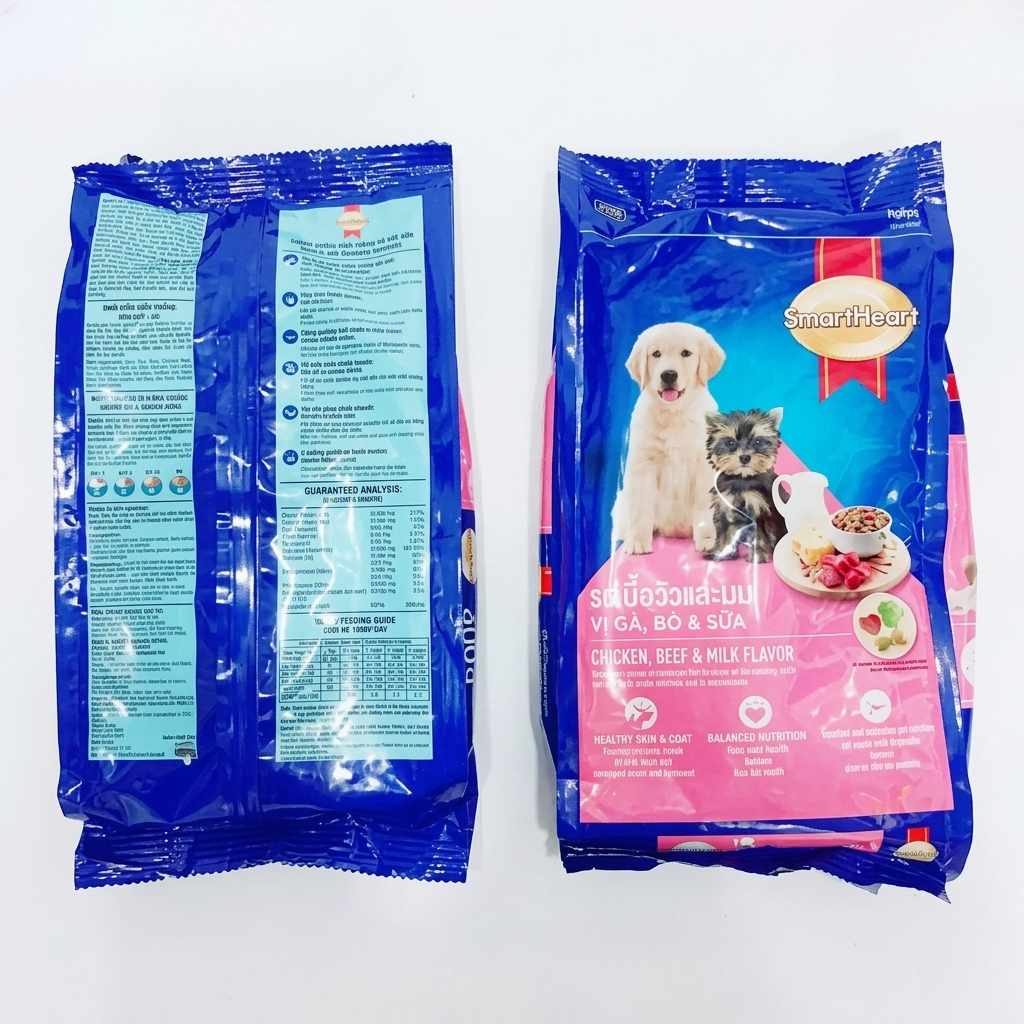
A back seal, also called a center seal, is formed when a flat film web is wrapped around itself and joined along the back of the pack. Combined with a horizontal seal at the top and another at the bottom, this creates a closed pouch with a single vertical seam. Because the pouch is made from one continuous piece of film, the format suits form-fill-seal machines, which is why it is so widely supplied as roll film for automatic packaging.
Back sealed bags are also supplied as ready-made pouches. In this form the bag is sealed along the middle of the back from end to end, with one end sealed and the other left open so that the customer can fill it. In both cases, the film is usually a printed multi-layer laminate that combines an outer printing layer, a barrier layer and an inner sealing layer, each doing a separate job.
2. Fin seal and lap seal: two ways to join back sealed bags
The back seam can be made in two ways, and the choice affects both appearance and film consumption. In a fin seal, the two edges of the film meet face to face and are sealed together, so the seam stands out from the back of the bag like the fin of a fish. This style gives a tight seal that holds up well under pressure and needs a good sealant layer such as CPP or PE, but it uses more film than the alternative.
In a lap seal, one edge of the film overlaps the other. The seam lies flat against the body of the bag, looks neater and saves film compared with a fin seal. The trade-off is that the outer layer also takes part in the seal, so it must be heat-sealable, for example PE, CPP or a film coated with sealing adhesive. If you order roll film, it is worth confirming the seal style and the unwind direction with your packaging machine supplier, since the same width of film can be wound in different orientations.
3. Key traits of back sealed bags
The first trait of back sealed bags is flexibility in film structure. Roll film for this format ranges from simple mono PE at 30–80 µm to laminates such as PET/PE at 70–100 µm for general use, PET/MPET/PE at 80–100 µm for medium barrier and PET/AL/PE at 80–100 µm for high barrier. For vacuum applications, PA/PE at 75–125 µm adds puncture resistance, and for sterilised food, PET/AL/RCPP at 90–100 µm withstands retort conditions.
The second trait is compatibility with automatic lines. Two-layer laminates such as OPP/CPP at 40–60 µm run well on form-fill-seal machines and keep the pack transparent, while OPP/MCPP at 45–55 µm adds light protection. A matte version, OPP matte/MCPP, gives a soft, low-gloss look while still blocking light.
The third trait is the large printable surface. Because the film is printed flat before it is formed into a tube, brands can use the whole front and back panel for artwork. In gravure printing, colours are laid down from light to dark, commonly yellow, magenta, cyan and then black, to keep images accurate. Finally, material efficiency matters: a lap seal can reduce film use, while a fin seal gives extra tightness, so the two styles let buyers balance cost against seal performance.
4. Applications of back sealed bags across industries
In snacks, confectionery and bakery, OPP/CPP, OPP/MCPP and OPP/MPET/CPP structures are common because they run smoothly on automatic machines and protect the product from light and moisture. For coffee and other dry foods that lose flavour quickly, PET/MPET/PE offers medium barrier, while PET/AL/PE gives very high barrier for coffee and pharmaceutical products. Spices and dry goods often use PET/CPP, which tolerates moderate heat.
Heavier products need stronger structures. Rice and pet food commonly use PET/PA/PE at 90–130 µm, where the nylon layer resists impact and puncture. Meat and seafood, which are often vacuum packed, use PA/PE. Foods that must be sterilised use retort-grade structures. Choosing correctly means starting with what the product needs to be protected from, such as moisture, oxygen, light, oil or mechanical damage, and then selecting the thinnest structure that does the job.
5. Back sealed bags and the shift toward recyclable packaging
Sustainability is changing how this format is designed. According to Packaging Insights, the EU’s packaging regulation requires packaging to be recyclable at scale by 2030, which is pushing converters toward single-polymer structures, with the industry dividing between PP and PE routes.
Mono-material options already exist for the back seal format. PE/PE structures at 60–120 µm recycle well but offer low barrier, so they suit dry foods and rice. MDO-PE/PE at 50–90 µm combines stiffness with good sealing for snacks and other foods. The compromise is barrier performance, so products that are sensitive to oxygen or moisture may still need a conventional laminate. Discussing the shelf-life target with your supplier will show which route is realistic.
6. Back sealed bags at Stavian Flexible Packaging – A comprehensive and reliable packaging partner
Stavian Flexible Packaging, a member of Stavian Group, supplies high-quality packaging solutions for domestic and export markets. Its production follows strict quality management standards and holds international certifications including ISO 14001:2015, ISO 9001:2015, GRS, REACH Compliance, FDA Compliant and KIWA. With 06 factories and an output of 50,000+ tonnes per year, Stavian Flexible Packaging is committed to delivering products and services of leading quality to customers at home and abroad.
To learn more about specifications or to request advice and samples, visit the back seal bag product page, or browse the full range at https://stavianpackaging.com/products/
Contact us:
Email: info@stavianpackaging.com
Hotline: +84 24 7306 8868/+84 98 899 2358
Website: https://stavianpackaging.com
Linkedin: https://www.linkedin.com/company/stavian-packaging-vietnam/
Instagram: https://www.instagram.com/stavianpackagingvietnam/
