Understanding how PE cling film is made provides crucial insight into why this flexible packaging material has become an essential staple in modern food preservation. Polyethylene cling film commonly known as PE wrap, combines advanced polymer science with precision manufacturing to deliver superior clarity, elasticity, and safety. From raw material selection to final extrusion and quality control, every stage in the manufacturing process determines the performance and safety of the end product.
This article offers an in-depth breakdown of how PE cling film is made, exploring the core raw materials, the primary extrusion processes, and the rigorous quality assurance standards required for food-grade flexible packaging.
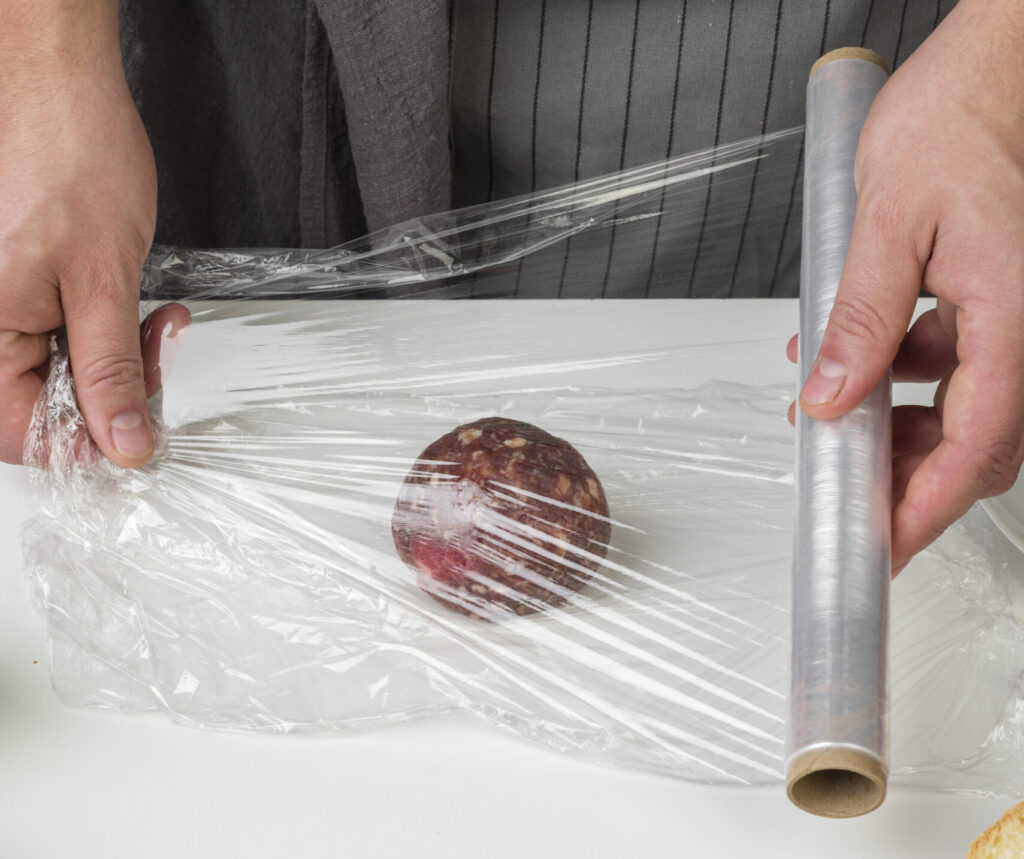 Picture 3. PE cling film’s applications
1. Raw materials used in PE cling film manufacturing
The journey of how PE cling film is made begins with high-purity, food-grade raw materials. Unlike traditional PVC wraps that rely heavily on chemical plasticizers, polyethylene wrap relies on specific resin formulations to achieve its natural flexibility and self-tack adhesion.
Base polyethylene resins:
-LLDPE (Linear Low-Density Polyethylene): The primary resin used in production. LLDPE provides high tensile strength, excellent puncture resistance, and elongation flexibility.
-LDPE (Low-Density Polyethylene): Blended with LLDPE to enhance surface gloss, clarity, and melt strength during processing.
mLLDPE (Metallocene LLDPE): Advanced metallocene-catalyzed resins offer uniform molecular weight distribution, significantly increasing tear resistance and allowing for thinner film gauges without compromising performance.
Cling additives and functional compounds
-PIB (Polyisobutylene): A non-toxic liquid additive that migrates to the film surface after cooling, providing the necessary tacky cling effect.
-VLDPE / ULDPE (Very/Ultra Low-Density Polyethylene): Solid elastomer resins blended directly into the polymer matrix to create inherent cling without liquid migration issues.
-Anti-Fog Additives: Prevents condensation droplets from forming on the inside of wrapped food packages in refrigerated display cases.
2. Step-by-step breakdown: How PE cling film is made
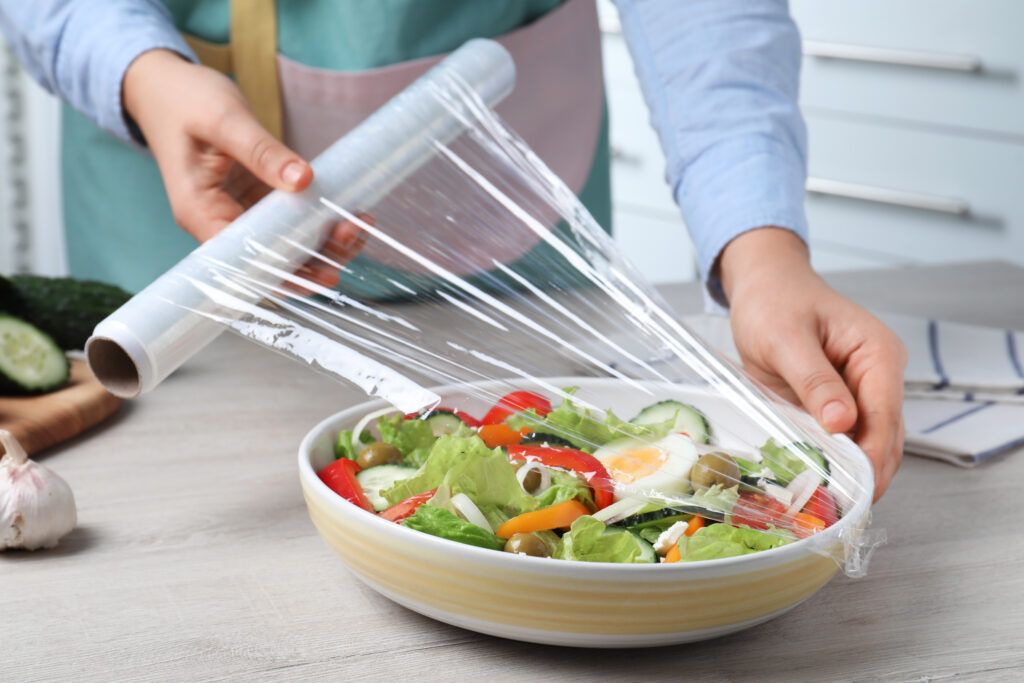
The core technology behind how PE cling film is made relies on continuous plastic extrusion. During extrusion, solid polymer pellets are melted, homogenized, shaped into thin films, and rapidly cooled. Manufacturers utilize two main production methods: Blown Film Extrusion and Cast Film Extrusion.
2.1. Resin feeding and dosing
Raw virgin PE pellets are gravimetrically metered along with masterbatches (cling additives, anti-fog agents) and fed into the extruder hopper. Precise dosing ensures consistent thickness and property distribution throughout the production run.
2.2. Melting and homogenization
The polymer mixture enters a heated extruder barrel containing a rotating screw. Mechanical shear and electric heating zones elevate the temperature to transform solid pellets into a uniform, molten polymer melt.
3. Extrusion techniques: Cast film vs. Blown film
3.1. Cast film extrusion
In the cast process, molten PE is forced through a flat T-die onto a set of internal water-cooled chill rollers. Rapid cooling (quenching) suppresses polymer crystallization, resulting in maximum transparency, high gloss, and uniform thickness control, ideal for commercial food wraps.
3.2. Blown film extrusion
In blown film production, the molten resin passes through a vertical circular die, forming a continuous tube. Compressed air inflates the tube into a bubble, expanding it radially while pulling it vertically. Air rings cool the bubble before it is collapsed into a flat double-layer sheet.
4. Slitting and rewinding
Once cooled and trimmed, large master rolls are transferred to high-speed automatic rewinding machines. Here, the film is slit into customer-specified widths and wound onto paper cores to create finished consumer or commercial rolls.
5. Quality standards and performance testing for PE cling film
Understanding how PE cling film is made requires examining the stringent quality assurance controls enforced during manufacturing. Food wrap must comply with international safety regulations and pass rigorous mechanical testing before shipment.
5.1. Food safety compliance and chemical testing
FDA and EU Compliance: All raw materials must be certified virgin food-grade polyethylenes free of heavy metals, plasticizers (Phthalates/DEHA), and Bisphenol A (BPA).
Overall Migration Limit (OML) Testing: Evaluates the total amount of substances that could potentially migrate from the packaging material into food stimulants under specified time and temperature conditions.
5.2. Physical and mechanical quality testing
Tensile Strength and Elongation: Evaluates the maximum stretch capacity before tearing. Premium grade film typically achieves over 300-500 % elongation at break.
Cling Adhesion Force: Measures the peel-apart force required to separate overlapping layers, ensuring the wrap seals tightly to glass, plastic, and metal containers.
Dart Drop Impact & Puncture Resistance: Tests the film’s resilience against sharp bone edges or rigid container corners during wrapping.
Optical Transparency: Uses haze meters to verify light transmission and clarity, ensuring consumers can inspect food contents without opening the wrap.
6. Quality packaging solutions with Stavian Packaging
Selecting high-performance, compliant food wrap requires partnering with an experienced manufacturer that maintains strict oversight across raw materials, extrusion technology, and quality control.
Stavian Packaging stands as a global leader in the production and supply of premium flexible packaging solutions. Our state-of-the-art manufacturing facilities utilize advanced cast film technology to produce high-grade PE cling film products that meet international food safety standards (including FDA and EU regulations).
Whether you require household rewound rolls or high-volume commercial stretch wraps, Stavian Packaging offers customizable options engineered for optimal cling, clarity, and tear resistance. Contact Stavian Packaging today to request a quote or learn more about our sustainable flexible packaging options!
Discover our product here: https://stavianpackaging.com/products/pe-cling-film/
Everyone also can connect with us through:
Email: info@stavianpackaging.com
Hotline:+84 24 7306 8868/+84 98 899 2358
Website: https://stavianpackaging.com
Linkedin: https://www.linkedin.com/company/stavian-packaging-vietnam/
