PVC cling film is widely used in food packaging because of its transparency, flexibility and ability to cling to surfaces. It helps cover food containers, wrap fresh ingredients and protect products during storage and handling. However, producing reliable PVC cling film requires careful material selection, controlled processing and consistent quality inspection.
Understanding how this packaging material is manufactured helps food businesses, distributors and packaging buyers make informed decisions about product performance, food-contact compliance and supplier reliability.
1. What materials are used in PVC cling film?
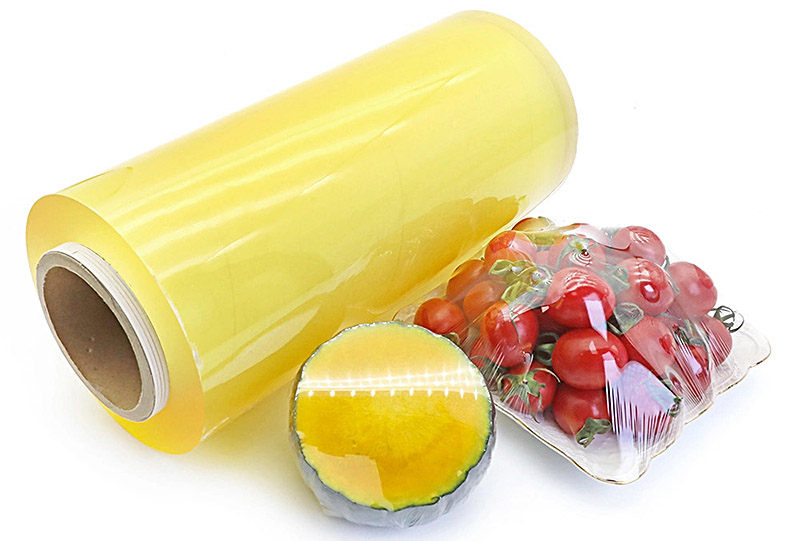
The primary raw material is polyvinyl chloride (PVC), a thermoplastic polymer that provides the basic structure of the film. However, PVC resin alone is generally too rigid for the flexibility and cling performance required in food wrapping applications. Manufacturers therefore use carefully selected additives to achieve the desired properties.
Key materials may include:
-PVC resin: The main polymer that forms the film structure.
-Plasticizers: Help improve flexibility, softness and stretchability. The type and amount must be carefully controlled, particularly for food-contact applications.
-Heat stabilizers: Help protect PVC from thermal degradation during processing.
-Processing aids and lubricants: Support stable manufacturing and help control processing behavior and surface characteristics.
-Other approved additives: Depending on the formulation, certain additives may be used to achieve specific performance or processing requirements.
The formulation determines important characteristics such as transparency, softness, cling, tensile behavior and resistance to tearing. For PVC cling film intended for food packaging, all relevant ingredients must be assessed for compliance with the applicable food-contact regulations in the target market.
2. How is PVC cling film manufactured?
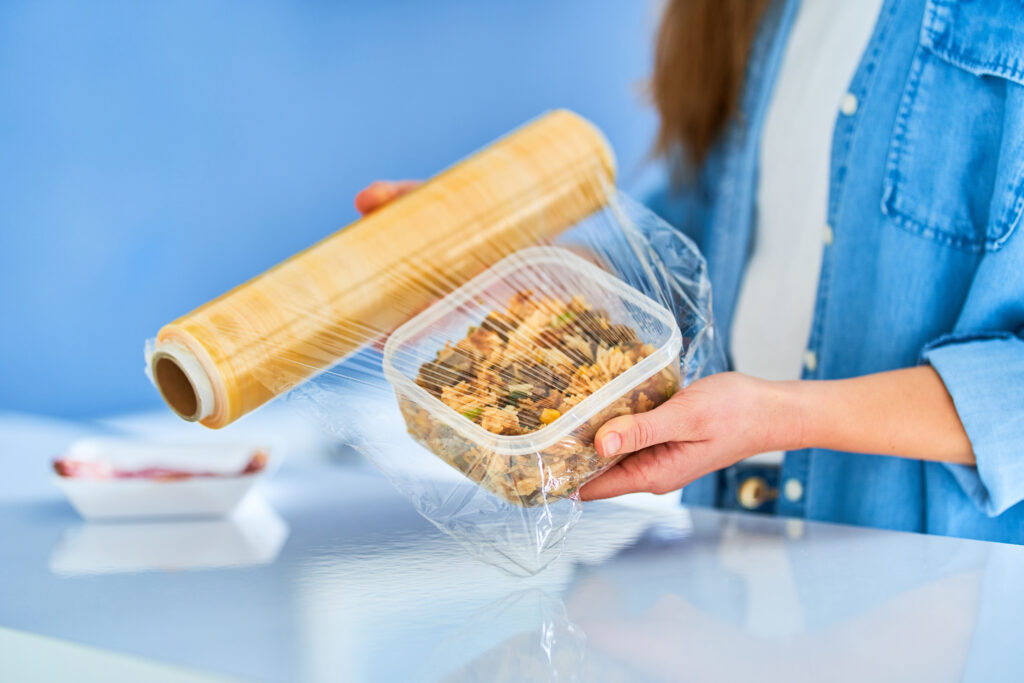
Step 1: Raw material preparation
Production begins with the preparation and inspection of PVC resin and other formulation ingredients. Manufacturers verify material specifications and supplier documentation to ensure that the raw materials meet established requirements.
The ingredients are then accurately weighed and blended according to the approved formulation. Consistent mixing helps distribute additives evenly, reducing the risk of variations in flexibility, appearance and processing performance.
Step 2: Compounding and plasticization
The prepared formulation undergoes controlled mixing and processing to achieve the required material characteristics. Depending on the production line, compounding may be performed separately or integrated into the manufacturing process.
Temperature, mixing conditions and material proportions must be carefully managed. Improper processing can result in uneven additive distribution, discoloration or unstable film properties.
At this stage, the goal is to prepare a consistent formulation that can be processed into thin, flexible film.
Step 3: Film formation
The prepared PVC compound is processed through suitable film-forming equipment. Calendering is a common method for manufacturing PVC film, in which the softened material passes through a series of heated rollers to form a continuous sheet with controlled thickness.
Depending on the formulation and equipment, extrusion-based processes may also be used. During film formation, manufacturers control processing temperature, roller conditions, line speed and material flow to achieve a uniform film structure.
These parameters influence transparency, thickness consistency, surface smoothness and mechanical performance. For PVC cling film, stable film formation is essential because uneven thickness or surface defects can affect wrapping performance.
Step 4: Cooling and thickness control
After film formation, the material is cooled under controlled conditions. It then passes through inspection and handling systems before being wound into rolls.
Thickness is monitored across the film width and along the production length. Excessive variation can affect strength, stretchability and ease of use. Manufacturers may also inspect the surface for holes, wrinkles, gels, contamination and other visible defects.
Step 5: Slitting and rewinding
The film is converted into rolls of the required width and length. Slitting equipment cuts the wider film into narrower sections, while rewinding systems create finished rolls suitable for distribution or further packaging.
Accurate slitting, stable winding tension and proper alignment help prevent uneven edges, loose rolls and telescoping. Finished rolls are then labeled, packed and identified for traceability.
3. How is quality controlled?
Quality assurance is essential throughout the manufacturing process. For PVC cling film, manufacturers should establish inspection procedures that reflect the product specification, intended application and applicable regulations.
Important quality checks include:
-Thickness and dimensional consistency: Confirming that the film meets specified thickness, width and length requirements.
-Transparency and appearance: Checking clarity, uniformity, surface cleanliness and visible defects.
-Cling performance: Evaluating how effectively the film adheres to suitable surfaces under defined test conditions.
-Stretchability and tensile properties: Assessing the film’s ability to stretch and withstand handling without premature tearing.
-Roll quality: Inspecting winding tension, edge alignment, roll appearance and packaging integrity.
-Food-contact compliance: Reviewing material declarations, applicable migration test results and other supporting documentation as required by the target market.
4. Partner with Stavian Packaging
At Stavian Packaging, we are committed to delivering packaging solutions tailored to diverse industry requirements. With a focus on manufacturing capabilities, quality management and customer-oriented solutions, we work to support businesses seeking reliable packaging partners.
Whether you are exploring packaging options for food products or looking to optimize your existing packaging supply chain, our team is ready to discuss your requirements and potential cooperation opportunities.
Contact Stavian Packaging today to learn more about our packaging solutions and discover how we can support your business with quality-focused, customized packaging options
Email: info@stavianpackaging.com
Hotline:+84 24 7306 8868/+84 98 899 2358
Website: https://stavianpackaging.com
Linkedin: https://www.linkedin.com/company/stavian-packaging-vietnam/
