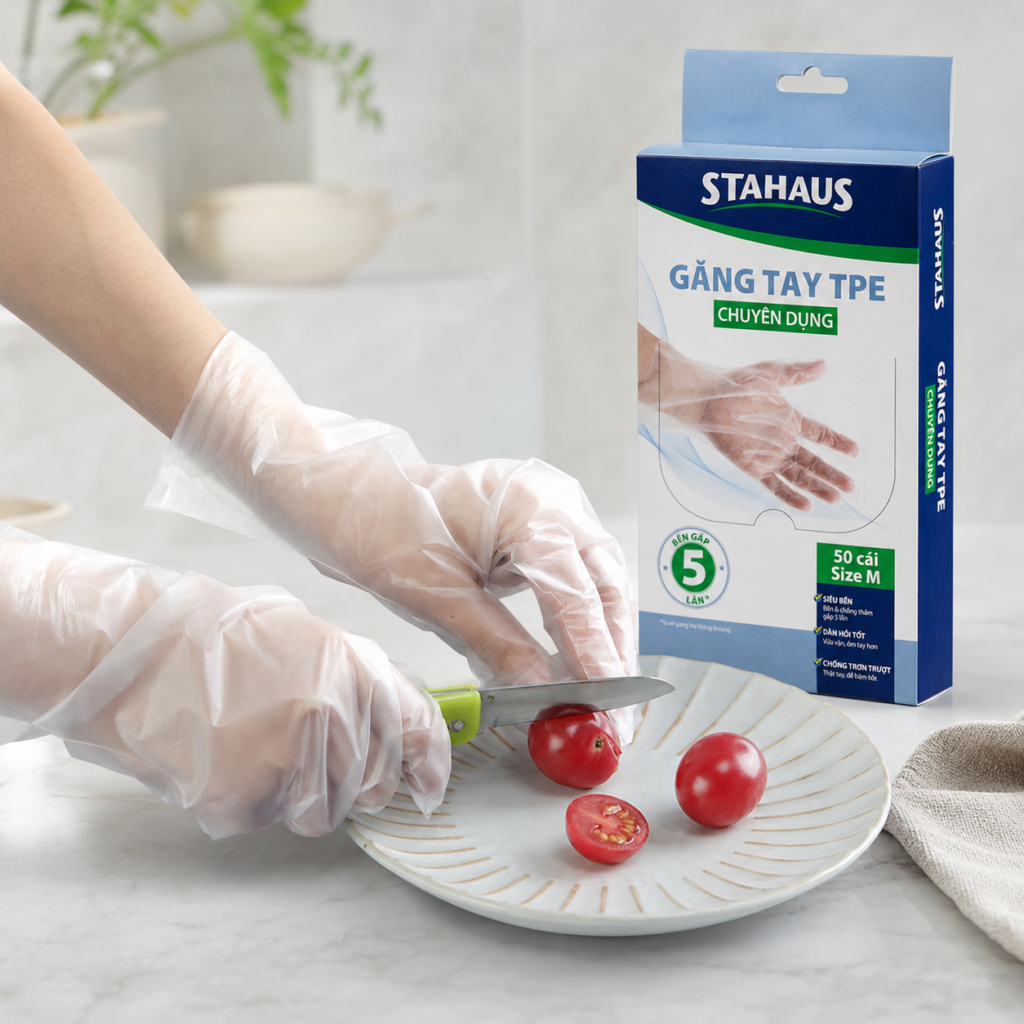
1. What are TPE gloves?
TPE stands for thermoplastic elastomer, a category of materials that combines thermoplastic processing characteristics with varying degrees of rubber-like flexibility. Disposable gloves made from these materials are available in different formulations, thicknesses, sizes, and surface finishes.
Unlike a material name alone, the finished product’s specifications determine how a glove performs. Stretch, fit, tear resistance, and suitability for food contact can vary between suppliers and product lines.
When selecting TPE gloves for a kitchen, buyers should therefore evaluate the actual product rather than assume that every version offers the same performance. A sample trial with the intended ingredients is a useful starting point.
2. Why consider them for rolling food?
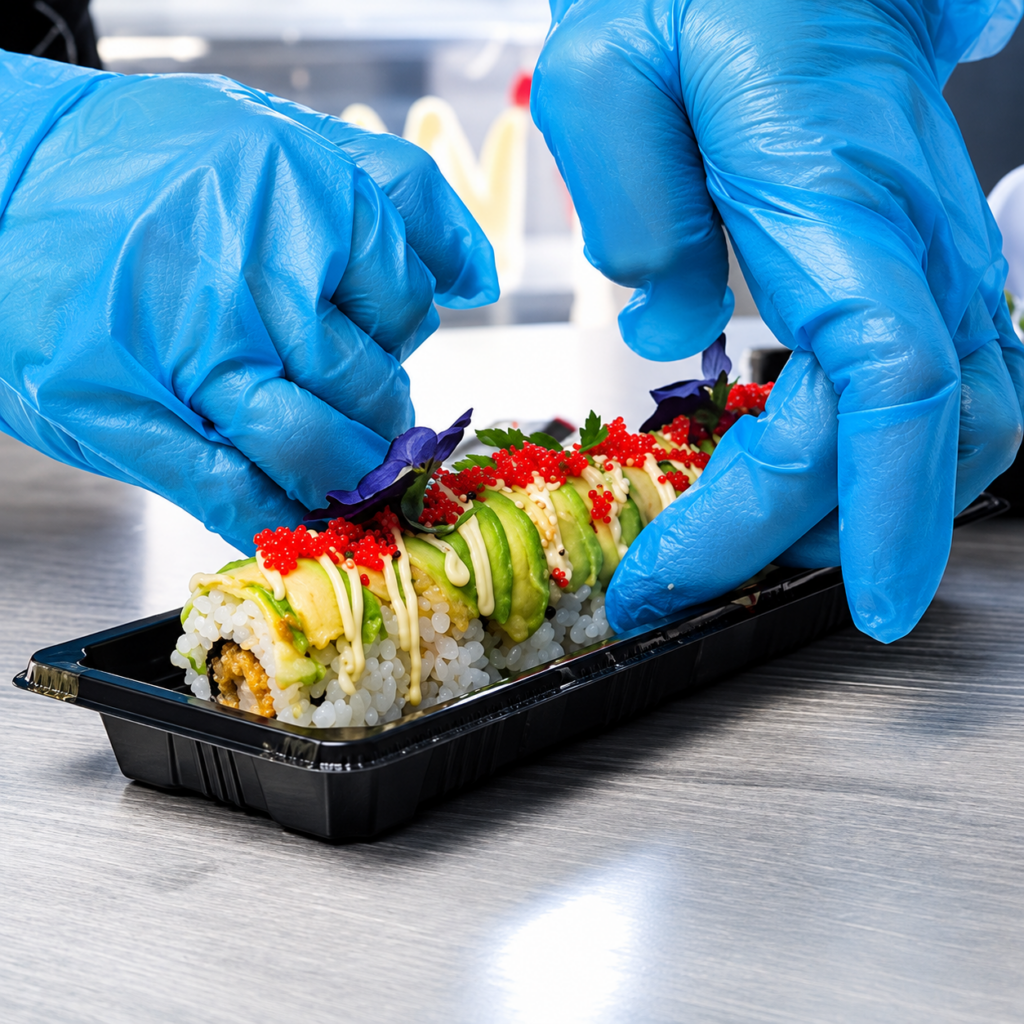
2.1. Flexibility for repeated hand movements
Making rolled food involves more than simply picking up ingredients. Workers need to position vegetables, distribute fillings, tuck in edges, and apply controlled pressure without tearing the wrapper.
Well-fitting TPE gloves may support these movements by allowing the fingers to bend comfortably during assembly. The practical benefit depends on the glove’s design and how closely its size matches the wearer’s hand.
A glove that is too loose may bunch around the fingertips, while an overly tight glove can restrict movement or tear during use. Testing several sizes helps identify a suitable balance between comfort and control.
2.2. A barrier during food assembly
Fresh spring rolls and many wraps are served without another cooking step after assembly. This makes hygienic handling particularly important because the worker directly handles ingredients that customers will eat.
Food-contact-compliant TPE gloves can provide a barrier between the hands and ingredients. However, the material name does not establish food-contact suitability. Buyers should obtain documentation covering the finished glove, its intended food types, and its conditions of use. Food-contact assessments consider intended use and potential substance migration into food.
This makes supplier documentation an essential part of product selection, alongside fit and handling performance.
2.3. Convenience for short preparation tasks
A busy kitchen often divides preparation into separate activities, such as portioning fillings, assembling rolls, and packing finished products. Disposable gloves can fit into this workflow when workers have clear instructions on when to change them.
TPE gloves may be useful at dedicated assembly stations where staff perform a defined food-handling task. Keeping suitable sizes within easy reach can help workers replace gloves promptly without disrupting the preparation line.
The best purchasing decision considers the whole process. A low unit price offers limited value if poor fit or frequent tearing leads to unnecessary replacements and slower production.
3. Which rolled foods could be suitable?
3.1. Fresh spring rolls
Fresh spring rolls typically involve softened rice paper, vegetables, herbs, noodles, and prepared protein fillings. Workers need gentle pressure to keep the wrapper intact while making the roll compact enough to hold its shape.
Trialling TPE gloves with the actual recipe can reveal whether the fingertips provide sufficient control. Wet rice paper and moist ingredients may behave differently from dry wrappers, so performance should be assessed under normal preparation conditions.
3.2. Sushi rolls
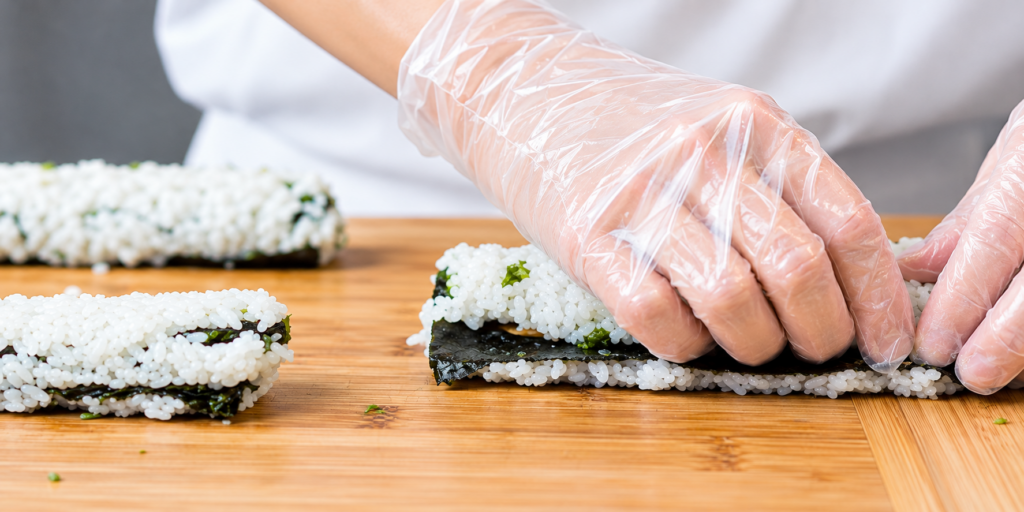
Sushi preparation requires controlled handling of rice, seaweed, and fillings. Sticky rice can make glove selection especially important, as adhesion may interrupt shaping and ingredient placement.
There is no reason to assume that every glove will prevent rice from sticking. Kitchens should test the selected product with their rice preparation method, tools, and working technique before introducing it across the sushi station.
3.3. Tortilla wraps and filled rolls
For tortilla wraps, workers arrange ingredients, fold the sides, and roll the product firmly. TPE gloves may suit this type of assembly if they provide adequate fit and remain intact throughout the task.
Businesses should also assess performance with sauces, oils, and moist fillings. A glove that works well for a dry vegetable wrap may feel different when handling a heavily dressed filling.
4. Find the right TPE gloves for your food preparation needs
At Stavian Packaging, our manufacturing operations focus on delivering packaging and food-handling solutions for domestic and international customers. We support diverse application needs through product development, production management, and quality control.
For businesses seeking TPE gloves for food preparation, our team can discuss product specifications, food-contact requirements, and supply options suited to your operations.
Discover our product here: https: https://stavianpackaging.com/products/651/
Everyone also can connect with us through:
Email: info@stavianpackaging.com
Hotline:+84 24 7306 8868/+84 98 899 2358
Website: https://stavianpackaging.com
Linkedin: https://www.linkedin.com/company/stavian-packaging-vietnam/
