In hospitals, even a single drop of fluid can become a source of dangerous infection, yet not all medical apparel provides the same level of protection. Are you sure you’re using the right type of healthcare uniforms for each situation? From sterile operating rooms to high-risk isolation wards, choosing the wrong protective medical apparel can compromise medical professionals’ safety and significantly increase operational costs while undermining critical infection control protocols.
This article will help you understand the three most common types of medical gowns, including surgical clothing, patient gowns, and medical scrubs, how they function under international standards, and how to choose the most appropriate option to ensure safety while optimizing efficiency in healthcare settings.
1. Why is medical gown important in the healthcare setting?

Healthcare professionals work in environments where contact with blood, body fluids, droplets, and contaminated surfaces can happen at any time. A medical gown acts as a protective barrier between the wearer and potential hazards.
Using the right medical gown helps:
-Reduce the risk of cross-infection
-Improve staff safety in high-risk areas
-Support infection prevention and control practices
-Improve operational efficiency by matching protection level to actual use
-Ensure compliance with healthcare safety standards
In short, a medical gown is not just a uniform item. It is a critical part of medical protection and infection control.
2. 3 Common types of medical gown used in hospitals

Based on the intended use, hospitals generally categorize gowns into these three main groups:
2.1. Surgical Gown
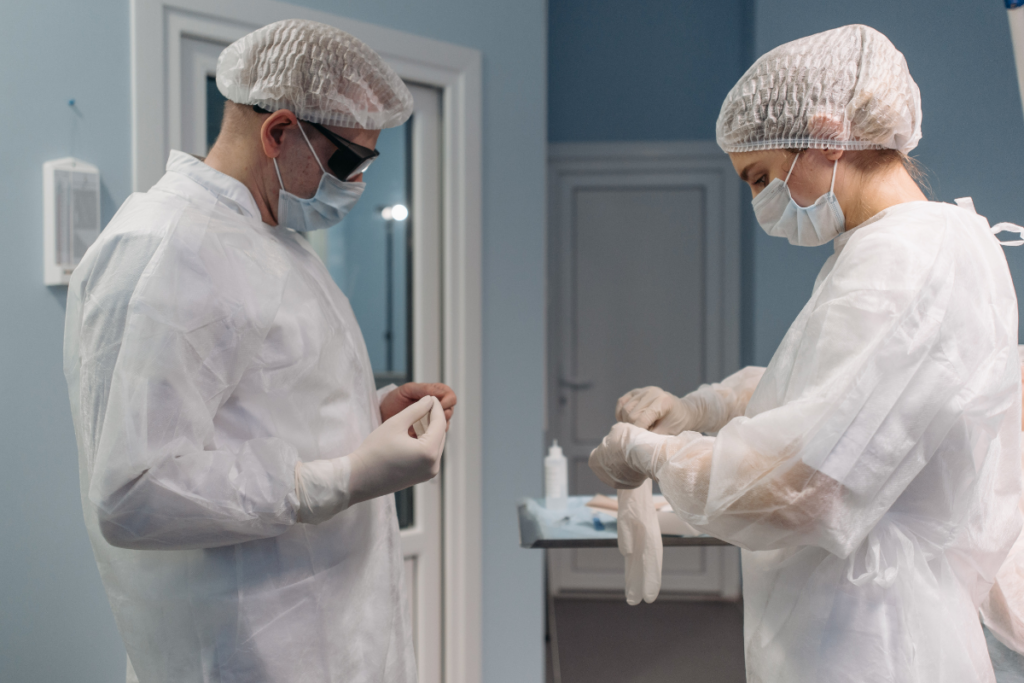
A surgical gown is designed for use in operating rooms and sterile surgical environments. It is intended to protect both the patient and the medical professional during invasive procedures.
This type of medical gown typically provides a higher level of barrier protection in critical zones such as the front torso and sleeves. Surgical gowns are commonly made from SMS or other advanced barrier materials and may be classified according to the required protection level for different procedures.
Surgical gowns are suitable for: operating rooms, sterile procedures, invasive treatment settings, situations with moderate to high fluid exposure
2.2. Isolation Gown
An isolation gown is used to protect healthcare workers and patients from the transfer of microorganisms and contaminants in non-surgical settings. It is commonly worn in isolation rooms, infectious disease wards, and general patient care areas where contact precautions are necessary.
Compared with a surgical medical gown, an isolation gown may have different design and protection requirements depending on the level of exposure and whether sterile conditions are needed.
Isolation gowns are suitable for: isolation wards, infectious disease control, contact precaution areas
routine patient care with contamination risk
2.3. Medical Coveralls
In some cases, healthcare facilities also use broader categories of protective apparel that function similarly to a medical gown for specific operational needs. These may include protective cover gowns or disposable protective garments used in laboratories, screening areas, emergency response, or support service environments.
These products are selected based on the nature of the task, expected exposure level, and comfort requirements.
3. Common materials used to make a medical gown
The protective performance of a medical gown is strongly influenced by the material used in its construction. Below are some of the most common materials found in healthcare gowns.
3.1. Polypropylene Nonwoven Fabric
Polypropylene nonwoven fabric is lightweight, breathable, and cost-effective. It is commonly used for low-risk medical gown applications where basic protection is required. This material is suitable for short-term use in environments with minimal fluid exposure.
3.2. Polyethylene Film
Polyethylene film provides a stronger liquid barrier than basic nonwoven materials. It helps prevent fluid penetration and is often used in gowns intended for higher exposure situations. However, it may be less breathable, which can affect comfort during extended wear.
3.3. Microporous Film Laminated Fabric
Microporous film laminated fabric combines liquid resistance with improved breathability. This makes it a practical material for a medical gown that needs both protection and comfort. It is often selected for environments where prolonged use and moderate to high fluid resistance are both important.
3.4. SMS Nonwoven Fabric
SMS stands for Spunbond-Meltblown-Spunbond. This multi-layer material is widely used in the production of high-performance medical gown products. The meltblown middle layer provides fine filtration and bacterial barrier properties, while the spunbond outer layers add strength and durability. SMS is often considered a preferred material for surgical and higher-protection gowns.
4. Comparison table – How to choose the right medical gown
| Comparison Criteria |
Surgical Clothing |
Isolation Gown |
Medical Coverall |
| Protection Level |
Moderate to High (Level 3-4) |
Low to Moderate |
Highest (360-degree) |
| Sterility |
Sterile |
Usually Non-sterile |
Usually Non-sterile |
| Primary Material |
SMS, SMMS (Reinforced) |
PP, SMS, PE Coated |
Microporous, Heavy SMS |
| Protection Zones |
Front panel and sleeves |
Full front and back torso |
Full body, head, and feet |
| Primary Application |
Operating Room, Invasive |
General Wards, Triage |
Infectious Diseases, Labs |
5. Solution for Choosing the Right Medical Gown with Stavian Packaging
Choosing the right medical gown is not only about cost, but also about protection level, suitability for the intended environment, and consistent product quality. For hospitals, clinics, isolation areas, and distribution partners, working with a reliable supplier is a practical way to improve safety, reduce waste, and optimize long-term operating costs.
Stavian Packaging provides solution-oriented support to help customers identify the most suitable medical gown options based on actual usage needs, material requirements, and protection expectations. This approach helps organizations select the right product more efficiently while maintaining quality consistency throughout the supply process.
Explore our products here: https://greenbags.stavianpackaging.com/products/pp-non-woven-fabric-in-medical/
