In the food processing, healthcare, spa, and industrial cleaning industries, maintaining hygiene and safety is always a top priority. Alongside traditional glove types such as HDPE and LDPE gloves, CPE disposable gloves are quickly becoming a preferred solution thanks to their durability, flexibility, and cost-effectiveness. So, what makes this product stand out? Let’s explore the details in the following article.
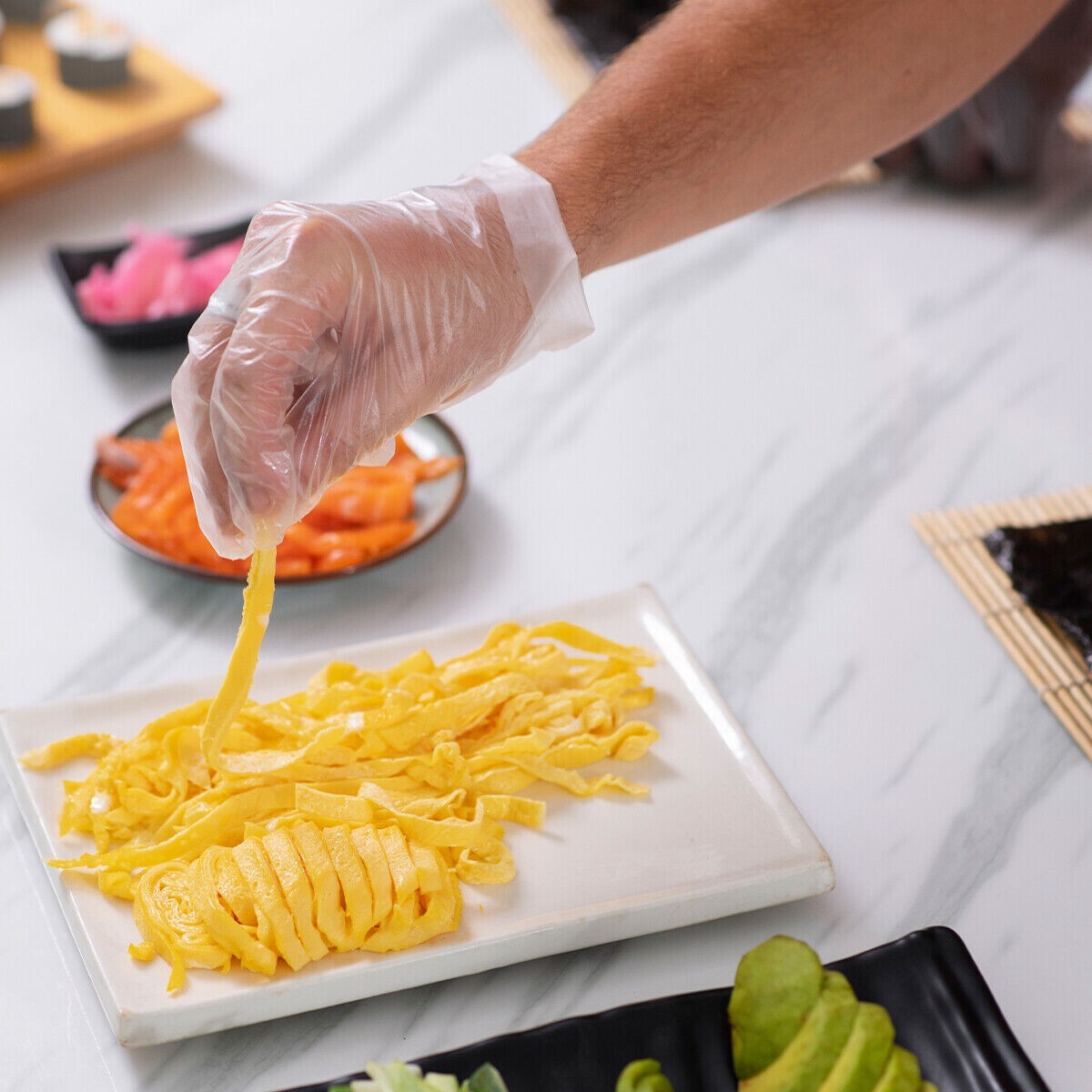
1. What Are CPE Disposable Gloves?
CPE is a type of plastic film material manufactured using a casting process. This process helps create a more uniform polymer structure, providing superior mechanical properties compared to conventional blown film.
Unlike standard HDPE gloves, which are thin, prone to tearing, and noisy when handled, CPE disposable gloves feature a lightly textured surface that feels soft and comfortable while providing effective slip resistance. This makes them an ideal choice for tasks requiring dexterity and a secure grip in wet environments.
2. Key Features of CPE Disposable Gloves
2.1 Superior Durability and Flexibility
One of the biggest advantages of CPE disposable gloves is their resistance to punctures and tears. Despite their lightweight and thin design, CPE film offers good tensile strength, allowing users to perform continuous tasks with less concern about punctures or tearing.
2.2 Resistance to Water, Grease, and Mild Chemicals
CPE material offers effective resistance to water, grease, and certain mild chemicals. This makes CPE disposable gloves suitable for keeping hands dry and clean when handling fresh food, household cleaning products, or cleaning solutions.
2.3 Skin-Friendly and Safe for Use
Unlike natural rubber gloves, which may cause allergic reactions due to latex proteins, CPE disposable gloves are latex-free and powder-free. They can be a suitable option for users seeking to avoid natural rubber latex. However, product safety and the risk of skin irritation depend on the specific formulation and manufacturing quality. Gloves intended for direct food contact should meet the applicable food-contact safety requirements.
2.4 Convenient Design for an Improved User Experience
The finely embossed surface provides a better grip, helping users handle tools and objects with greater control. In addition, the comfortable design supports ease of use during routine tasks.
- Why Are CPE Gloves Considered Safer Than Conventional Plastic Gloves?
3.1 No Need for Plasticizers – Reducing Concerns About Chemical Migration into Food
-Conventional plastic gloves: Some plastic materials require additives to achieve specific levels of flexibility. Certain additives, such as phthalates used in some PVC products, may migrate into food under particular conditions, especially when exposed to heat or fatty foods. The actual risk depends on the material composition, additives, and conditions of use.
-CPE gloves: CPE is a polyethylene-based material that can provide flexibility without relying on the same plasticizers commonly used in flexible PVC. However, the absence of plasticizers and the safety of food contact should be verified through product specifications and relevant compliance documentation.
3.2 Reduced Risk of Tearing and Plastic Fragments Contaminating Food
-Conventional thin PE gloves: Depending on their thickness and manufacturing quality, some thin polyethylene gloves may tear or become damaged during vigorous handling, potentially increasing the risk of physical contamination.
-CPE gloves: Their film structure can provide good mechanical strength and tear resistance, helping reduce the risk of glove damage during use. Actual performance depends on the product’s thickness, design, and quality.
3.3 Powder-Free, Latex-Free, and Less Likely to Have an Unpleasant Odor
CPE disposable gloves are generally powder-free and do not contain natural rubber latex. They may be a suitable alternative for people seeking to avoid latex exposure. However, odor and the potential for skin irritation depend on the product formulation and manufacturing process.
According to Food Safety Magazine, a study published in the Journal of Food Protection found that disposable gloves used in food handling may pose physical, chemical, and microbiological contamination risks when quality is inadequate. The study reported failure rates of up to 41% for unused vinyl gloves and 61% for unused polyethylene gloves in the products tested. It also discussed the potential migration of chemicals such as phthalates and bisphenol A (BPA) into food. These findings highlight the importance of selecting gloves that meet food-contact requirements and are subject to strict quality control.
In addition, glove manufacturer Eagle Protect PBC submitted a petition to the U.S. Food and Drug Administration (FDA), proposing a ban on single-use PVC gloves for food handling. The petition raised concerns about potential phthalate migration into food, glove failure during use, and limitations in quality control.
4. Practical Applications of CPE Disposable Gloves
Thanks to their combination of useful properties and cost-effectiveness, CPE disposable gloves are used across a wide range of industries:
-Food processing and packaging: Used in kitchens, restaurants, and seafood and agricultural processing facilities to help reduce cross-contamination.
-Beauty and personal care: Used for hair coloring, nail services, and certain basic skincare treatments, depending on the task and product suitability.
-Healthcare and patient care: May be suitable for basic care tasks and routine cleaning when the gloves meet the applicable requirements. They should not replace medical examination gloves when a task requires certified medical protection.
-Light industry and cleaning: Used for household cleaning, handling electronic components, printing operations, and packaging goods, depending on the application.
4. Stavian Flexible Packaging – A Trusted Partner for Comprehensive Packaging Solutions
Stavian Flexible Packaging, a member of Stavian Group, is a Vietnam-based supplier of high-quality packaging solutions for domestic and international markets. Its manufacturing processes are managed in accordance with stringent quality management standards, with certifications and compliance credentials including ISO 14001:2015, ISO 9001:2015, GRS, REACH Compliance, FDA compliance, and KIWA, among others. With six manufacturing facilities and an annual production capacity of more than 50,000 tonnes, Stavian Flexible Packaging strives to deliver high-quality products and services to customers in Vietnam and worldwide.
To learn more about the technical specifications and materials of CPE disposable gloves, or to request a competitive quotation for professional packaging products, please visit our product page:
https://stavianpackaging.com/products/cpe-gloves/
https://www.food-safety.com/articles/10895-fda-petitioned-to-ban-pvc-gloves-for-food-handling-due-to-inadequate-food-safety
https://www.food-safety.com/articles/9503-study-are-gloves-worn-by-food-handlers-protective-of-or-damaging-to-food-safety
