CPE gloves are widely used in the food service, food processing, and sanitation services thanks to their convenience, hygiene, and affordability. Many businesses today choose CPE disposable gloves as a reliable protective solution for handling food or maintaining sanitation in daily operations.
To ensure stable quality and consistent performance, manufacturers follow a structured CPE gloves production process. Below are the five main stages of producing our CPE gloves, from raw material preparation to packaging and delivery.
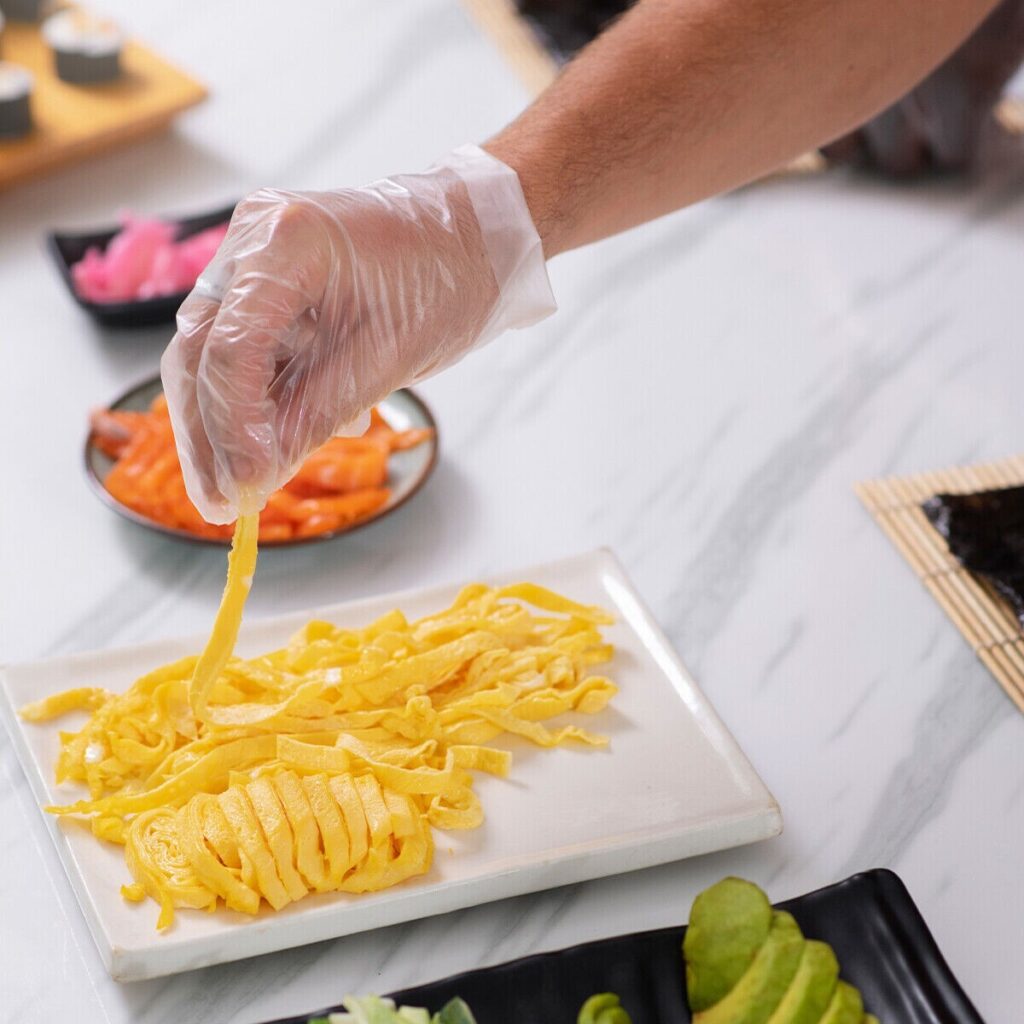
1. What are CPE gloves?
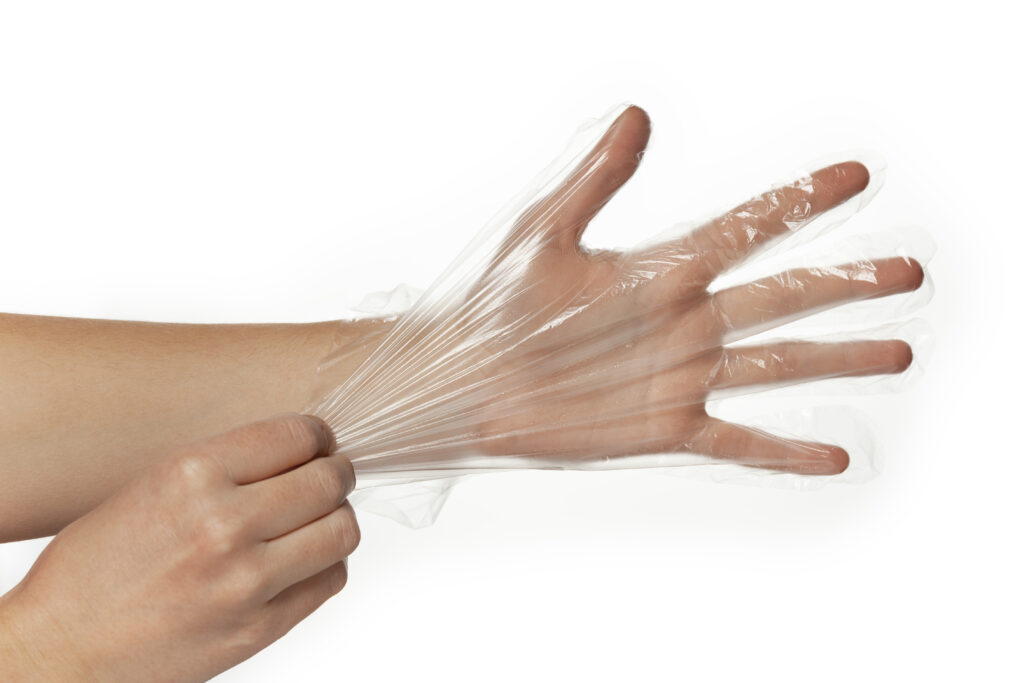
CPE gloves are made from Chlorinated Polyethylene (CPE), a synthetic polymer produced by chlorinating polyethylene. They provide good elasticity, flexibility, and impermeability. The surface of these gloves is often embossed to increase friction and reduce slippage during use.
This type of gloves are usually powder-free, latex-free, and designed for single-use, making them a safe and eco-friendly option. They are ideal for tasks that require basic hygiene, particularly in food processing, sanitation, beauty services, and customer care industries.
2. 5 Steps in the production of CPE gloves
2.1. Stage 1: Raw material preparation
The raw material is weighed and mixed in appropriate proportions to create a stable resin mixture. The quality of the raw material directly affects the thickness, flexibility, and durability of disposable CPE gloves.
2.2. Stage 2: Film blowing or casting
After preparation, the raw material is melted and processed through a film blowing or casting system to produce thin polyethylene sheets. This step forms the base film used to manufacture CPE gloves. The production system carefully controls temperature, film thickness, and cooling conditions to maintain uniform material quality. Consistent film thickness helps ensure that CPE disposable gloves remain comfortable to wear while maintaining sufficient strength during use.
2.3. Stage 3: Embossing the surface texture
Once the CPE film is formed, it passes through embossing rollers that create a textured surface. This embossed surface is one of the key features of CPE gloves, helping improve grip during use. The texture reduces slipping when handling wet or oily surfaces such as food ingredients or kitchen tools. Embossing also improves the flexibility and usability of the gloves while preventing the film layers from sticking together.
2.4. Stage 4: Cutting & sealing
After being formed into film, the plastic rolls are fed into an automatic die-cutting machine to shape the gloves. The system uses metal molds shaped like hands in common sizes such as S, M, L, and XL. During this process, the machine applies high temperatures to both cut each glove from the plastic film and heat-seal the edges together, ensuring a complete shape and a tight seal.
2.5. Stage 5: Quality inspection and packaging
The final stage of the CPE gloves production process is quality inspection and packaging. Manufacturers inspect the finished CPE disposable gloves to check:
-Thickness consistency
-Proper glove shape
-Clean embossed surface
-Overall product quality
Understanding the CPE glove manufacturing process helps businesses better assess product quality and standards. At Stavian Packaging, disposable CPE gloves are developed to meet the needs of the food and hygiene industries, with a manufacturing process that is controlled and quality-checked at multiple stages.
You can find more details at: https://stavianpackaging.com/products/cpe-gloves/
